Do you have any idea about colon surgeries? Well, there are about 600000 surgeries of colon that are performed every year. The patients who undergo this surgery may be suffering from diseases like polyps, colorectal cancer, colonic inertia, Crohns colitis and ulcerative colitis which are the most common inflammatory diseases of the bowel and even the surgery of diverticulitis where it is required that all of your colon has to be removed. This is called colectomy.
The age old procedure that has been used for years is the “open colon surgery” where there is only one single incision made on abdomen of the patient but it is very long. The traditional method of surgery keeps the patient in the hospital after the surgery for about a week and the recovery process takes about six to eight weeks. Today, there are less invasive procedures that are appropriate for many patients who need surgery of colon. Laparoscopic surgery is one of the most common as well as the most prevalent when it comes to minimal invasive techniques of operation.
The large intestine is what comprises of the colon and it is basically the lower most part of your digestive tract. The intestine consists of three parts: the large intestine, the small intestine and the rectum. It is a tubular organ in the body. When you eat anything, the food gets digested in the stomach and then the whole thing is emptied into the small intestine. This is where the nutrients of the food are absorbed by your body and whatever waste is left behind moves out of your body through the colon and then through the rectum.
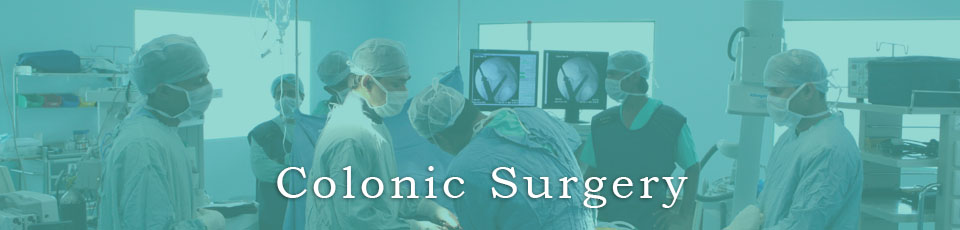
Now, we come to the laparoscopic surgery of colon. This is by far the most minimal invasive technique of surgery done by surgeons all over the world and this procedure is also very commonly performed because of the very few incisions that are required by it. Although the time required by a patient to stay in the hospital and the time required to return back to their normal active life solely depends on the procedure followed. Even so, the time needed for recovery is far lesser as compared to the open surgery that could have been done in the same case. Most of the colon resections that are done by laparoscopy, the maximum number of incisions required would be 5 or so as the whole of the inside of your body will be visible to your surgeon on a monitor screen. In some very complicated cases where laparoscopy is still possible, the incision opening might be as big as 3 inches.
The advantages of colon resection using laparoscopy are really varied. The result of every laparoscopic operation is different for each patient and also the overall condition that the patient is in. The main positive points of having laparoscopic surgery are that you have to endure far lesser post-operative pain and comparatively short stay in the hospital. You can get back to eating solid food quicker and the bowel also starts functioning faster. You can return to your Normal life a lot faster.

Call us directly: +91 98765 43210
Kolkata, West Bengal, India View Location
Address
Kolkata
West Bengal
India
Useful Links
Location
Follow Us


© 2016 Dr. Soumitra Chandra